





Differences and similarities in types of management systems for the built environment

Contents |
[edit] Introduction
Modern buildings and workplaces increasingly rely on digital systems to improve efficiency, sustainability, and regulatory compliance. The various acronyms for the most widely used include BMS, EMS, FMS, IWMS, CMMS, and CAFM and whilst these tools often overlap in purpose and approach, each system has distinct roles and often governed, where applicable, by specific UK and European standards. Here below are some short descriptions of these tools, followed by similarities and differences.
[edit] Types of system
Here is a brief 2–3 sentence explanation of each system and its specific role:
- Asset Management System (AMS): An AMS tracks and manages physical assets throughout their lifecycle, including acquisition, maintenance, and disposal. Its role is to optimise asset utilisation, reduce costs, and support decision-making for replacements and upgrades.
- Building Energy Management System (BEMS): BEMS monitors and controls a building's energy usage, such as lighting, HVAC, and power systems. It helps improve energy efficiency, reduce utility costs, and lower environmental impact. Support BS EN 15232 for energy performance through building automation, and BS 7671 (IET Wiring Regulations) for electrical safety.
- Building Management System (BMS): A BMS integrates and automates control of building infrastructure like HVAC, lighting, fire safety, and security systems. Its main role is to ensure operational efficiency, occupant comfort, and safety.
- Computer Aided Facilities Management (CAFM): CAFM uses software to support facility management tasks such as space planning, maintenance scheduling, and asset tracking. It improves the coordination and documentation of facility-related operations. Includes space planning, asset tracking, and maintenance, often integrating with CAD or BIM files. They are more operationally focused than IWMS and narrower than FMS.
- Computerised Maintenance Management System (CMMS): A CMMS manages maintenance activities, work orders, and equipment records. It helps organisations reduce downtime, streamline repairs, and extend asset life. Task-driven tools with scheduling, asset histories, and repair workflows, not normally spatial or strategic.
- Environmental Management System (EMS): An EMS is a framework that helps organisations monitor and improve their environmental performance. It ensures compliance with regulations and promotes sustainable practices. Structured around ISO 14001:2015. EMS helps demonstrate sustainability performance and legal compliance, particularly in reducing emissions and waste.
- Facility Management System (FMS): FMS supports the overall administration and coordination of facility operations, including space, maintenance, and resource management. It enhances productivity and service delivery across a facility. Aligns closely with ISO 41001 and focus on service delivery, space management, and operational planning, coordinating the use of assets and services within the built environment.
- Integrated Workplace Management System (IWMS): IWMS is a comprehensive platform that integrates real estate, facilities, maintenance, and sustainability management. It enables strategic planning and operational efficiency across the workplace. A broad scope combining elements of CAFM, CMMS, FMS, and more; handling real estate, maintenance, capital projects, and sustainability in a single platform.
- Management Information System (MIS): MIS collects, processes, and presents business data to support decision-making and performance monitoring. Its role is to provide timely and relevant information to managers.
- Quality Management System (QMS): A QMS is a formalised system that documents processes, procedures, and responsibilities for achieving quality objectives. It ensures consistent product/service quality and compliance with standards like ISO 9001.
- Security Risk Management System: This system identifies, assesses, and mitigates security risks across an organisation. It helps protect assets, people, and data through structured risk evaluation and response strategies.
- Warehouse Management System (WMS): A WMS controls the movement, storage, and tracking of inventory in warehouses. It enhances inventory accuracy, improves order fulfilment, and streamlines warehouse operations.
- Work Order Management System: This system tracks and manages maintenance or service tasks from request to completion. It ensures efficient task assignment, progress tracking, and resource allocation.
[edit] Similarities between systems
All these systems aim to enhance the efficiency, safety, and sustainability of buildings. They rely on data, either in real-time or scheduled intervals, to support decision-making, automate tasks, or monitor performance. Integration across systems is becoming more common, particularly in large or complex estates, where platforms such as IWMS act as an umbrella over others like CMMS or CAFM. They can all contribute, directly or indirectly, to compliance with ISO 41001:2018 the international standard for facility management, which promotes coordinated operations and improved performance of built environments.
[edit] Differences between systems
The systems you listed serve different, sometimes overlapping functions within organisations, especially in facility, operations, and enterprise management. Below is a summary of key differences between them, categorised by primary focus, scope, and functionality:
[edit] The focus of different systems
[edit] Systems Focused on Assets & Maintenance
AMS (Asset Management System)
- Primary Role: Manages physical assets through their lifecycle.
- Key Differences: Broader asset lifecycle focus (procurement → disposal); includes valuation, depreciation
CMMS (Computerised Maintenance Management System)
- Primary Role: Manages maintenance operations and work orders.
- Key Differences: Maintenance-focused; narrower than AMS; tracks repairs, inspections, downtime
CAFM (Computer Aided Facilities Management)
- Primary Role: Manages facilities, assets, and space
- Key Differences: Broader than CMMS; integrates space, assets, and sometimes CAD drawings
- Primary Role:Tracks service/maintenance tasks
- Key Differences: Narrower than CMMS; may not include asset history or preventive maintenance
[edit] Systems Focused on Buildings & Energy
BMS (Building Management System)
- Primary Role: Automates building controls (HVAC, lighting, fire safety)
- Key Differences: Hardware/software system; focusses on real-time control and automation
BEMS (Building Energy Management System)
- Primary Role: Monitors and optimises energy consumption.
- Key Differences:A subcomponent or companion to BMS; focused purely on energy efficiency
[edit] Broader Facilities / Workplace Systems
FMS (Facility Management System)
- Primary Role: Coordinates all facility services and operations.
- Key Differences: Encompasses space, maintenance, vendor, and asset management.
IWMS (Integrated Workplace Management System)
- Primary Role: Integrates multiple facility and real estate functions.
- Key Differences: Broader and more strategic than FMS; includes leasing, sustainability, and capital planning.
CAFM (Computer Aided Facilities Management)
- Primary Role: Supports operational-level facility tasks via software.
- Key Differences: More tactical; overlaps with FMS, but less integration than IWMS
[edit] Systems Focused on Information & Quality
MIS (Management Information System)
- Primary Role: Provides data reporting and decision support.
- Key Differences: Not facility-specific; used for broader business insights across departments
QMS (Quality Management System)
- Primary Role: Ensures consistent quality and compliance.
- Key Differences: Focused on product/service quality and processes; often aligned with ISO standards.
[edit] Systems Focused on Environment, Security, and Inventory
EMS (Environmental Management System)
- Primary Role: Tracks environmental impact and sustainability.
- Key Differences: Manages waste, emissions, compliance with environmental regulations
Security Risk Management System
- Primary Role: Identifies and mitigates security threats.
- Key Differences: Risk assessment, incident tracking, security policies – physical and/or cyber.
WMS (Warehouse Management System)
- Primary Role: Manages warehouse inventory, picking, and shipping.
- Key Differences:Specialized for logistics and warehouse operations; focusses on inventory accuracy
[edit] Conclusions
Choosing the right system depends on the organisation’s priorities — whether automation (BMS), sustainability (EMS), operations (FMS/CMMS/CAFM), or integration (IWMS). Each plays a vital role in supporting standards compliance and efficient building operation across the construction and property lifecycle.
[edit] Related articles on Designing Buildings
- Asset.
- Asset information model.
- Asset management.
- Asset management strategy.
- Asset management team.
- Creating an asset register for construction projects.
- Digital asset management.
- Economic Order Quantity EOQ.
- Enterprise asset management.
- Facilities management.
- Facilities management audit FMA.
- Facility condition assessment FCA.
- Facility condition index FCI.
- Knowledge asset management.
- Property management.
Featured articles
Check out some of the best features and news from Designing Buildings as well as key stories from around the web.

Channel 4 broadcaster to host 125th anniversary ceremony.
Listed structures on the rail network
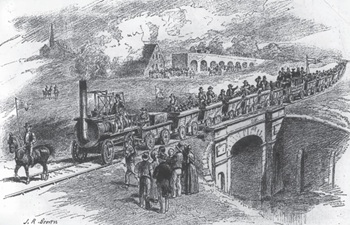
Heritage interests and operational requirements must be balanced.
Historic England publishes research into embodied carbon when retrofitting traditional buildings.

New Prime Minister delivers on ECA call for cut in electricity costs.

CIOB reacts to the announcement of Andy Burnham as Prime Minister.

Heritage and conservation science workforce survey - Have your say.

England's Suburbs 1820-2020. Book review.

New, more proportionate and targeted approach for higher-risk building assessments.

Government brings British Steel into public ownership.

UKCW Birmingham returns with bold new theme and focus.
New guidance published on competence requirements for self-certification schemes.
Construction Management, 8 July

NEETs crisis drives interest in trades, but apprenticeships barriers remain.